Maintenance strategy
Why preventive maintenance decides vessel reliability
INNOV8 Holding (Pty) Ltd · 4 March 2026 · 5 min read
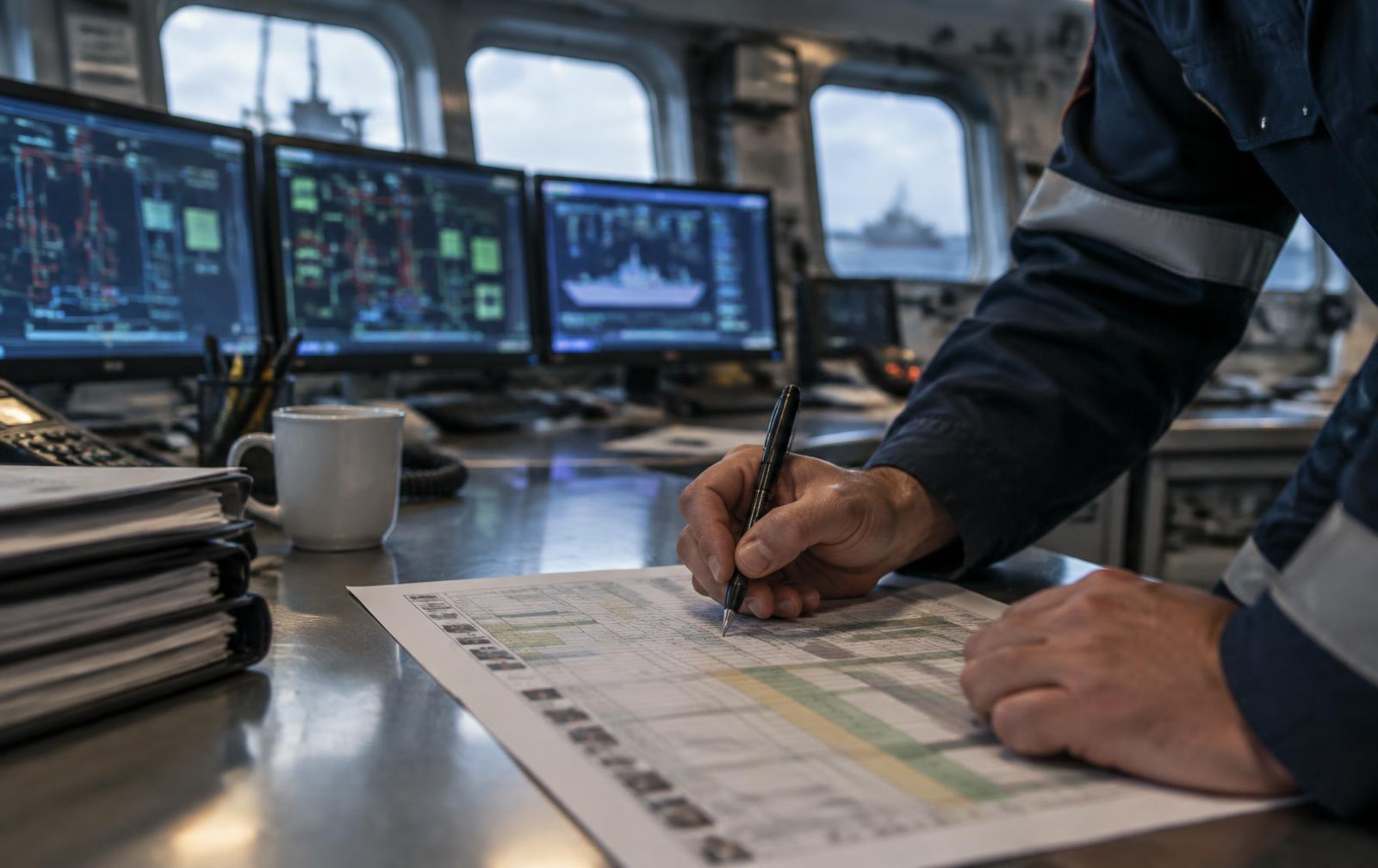
Illustrative image.
Reliability at sea is built long before a failure occurs. A short look at how preventive routines, condition monitoring and honest record-keeping keep machinery available.
Availability is planned, not hoped for
A vessel's machinery does not fail without warning as often as it appears. Bearings run warm before they seize, filters load before pressures drop, and vibration signatures change before couplings let go. Preventive maintenance exists to catch those signals while the vessel is still operating normally and while parts can still be sourced on ordinary lead times.
The difference between a planned intervention and an emergency repair is rarely technical skill. It is timing, information and preparation.
Three routines worth protecting
First, fixed-interval tasks on critical machinery: lubrication, filter changes, calibration and inspection at intervals set by the OEM and adjusted for actual running hours. Second, condition monitoring on rotating equipment, where temperature, vibration and oil analysis provide early evidence of wear. Third, a defect list that is genuinely maintained, so that small items do not accumulate silently into a large docking scope.
None of these require sophisticated technology. They require discipline and a system that records what was done and what was found.
Records are part of the maintenance
A task completed without a record is a task that cannot be planned against next time. Maintenance histories inform interval adjustments, spares holdings and dry-docking scopes. They also support surveys and audits, where the ability to show evidence matters as much as the work itself.
Where crews are rotating and technical staff change, the written record is the only continuous memory the vessel has.
Written by INNOV8 Holding (Pty) Ltd, a marine engineering solutions company based in Durban, KwaZulu-Natal. This article is general technical commentary and is not vessel-specific engineering advice.
Discuss your engineering requirements