
Ship repair
Planning a vessel maintenance period that stays on scope
INNOV8 Holding (Pty) Ltd · 18 February 2026 · 6 min read
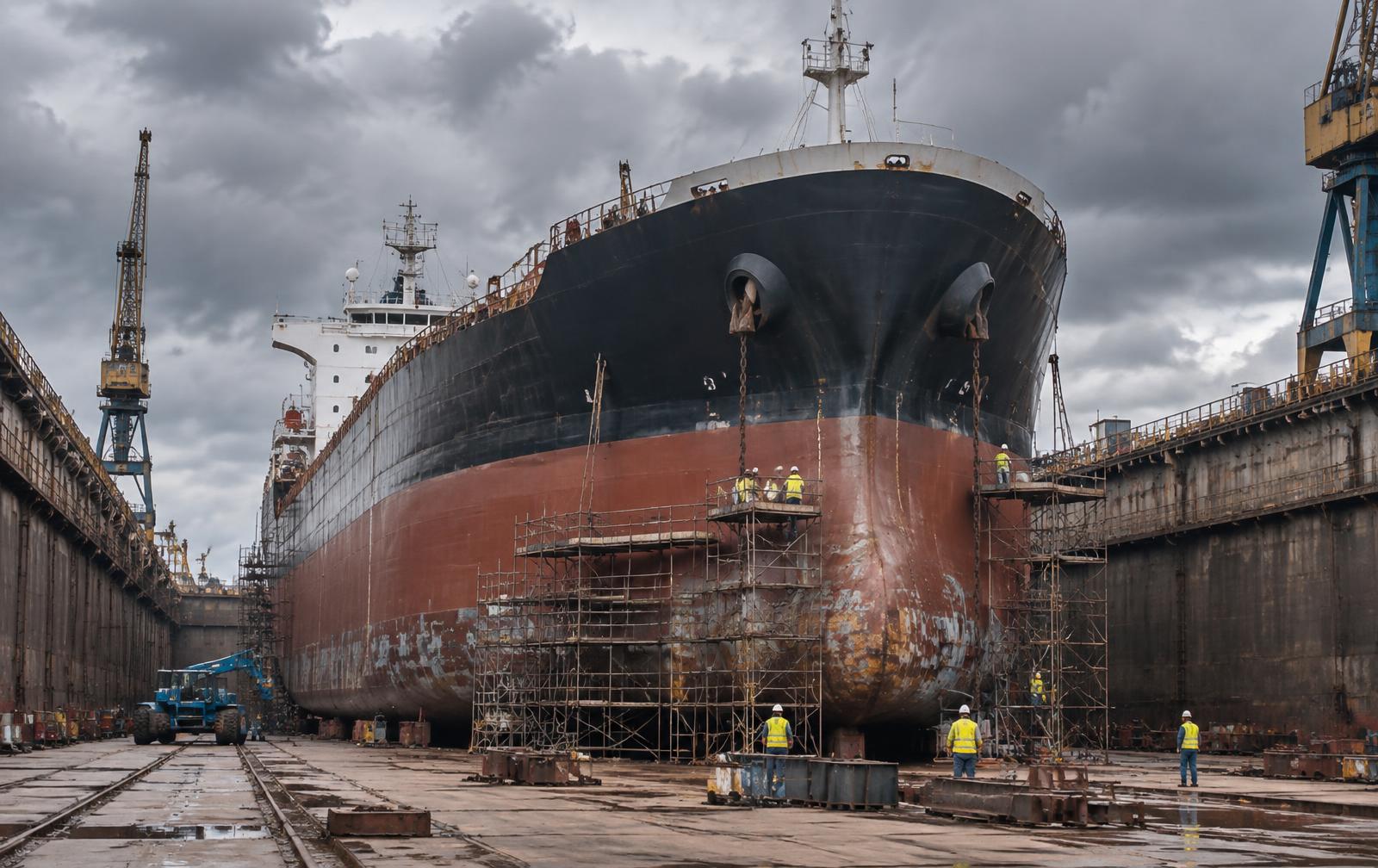
Illustrative image.
Dry-docking overruns usually begin months earlier, in an unclear scope. How defect lists, early supplier engagement and daily control keep a maintenance period predictable.
The scope is the schedule
Most maintenance periods do not overrun because the work was difficult. They overrun because the work was discovered late. A defect list compiled steadily over the operating cycle, with photographs, measurements and the crew's own observations, gives the shipyard a scope it can price and plan against.
Work discovered once the vessel is already on blocks competes for the same labour, cranes and access as everything else in the dock.
Engage suppliers before the vessel arrives
Long-lead items — shaft seals, specialised valves, OEM-specific spares — set the critical path. Identifying them early and confirming lead times with suppliers and OEMs removes the most common source of standing time.
Where equipment requires OEM attendance, availability of the technician is often scarcer than the part itself.
Control the period daily
A short daily review of progress, new findings and approvals keeps decisions moving at the speed of the work. Emerging items are priced and approved within the day rather than at the end of the week, and the close-out list is built continuously rather than assembled in the final hours.
Good coordination is unglamorous: it is mostly the removal of waiting.
Written by INNOV8 Holding (Pty) Ltd, a marine engineering solutions company based in Durban, KwaZulu-Natal. This article is general technical commentary and is not vessel-specific engineering advice.
Discuss your engineering requirements